Massive Expanding Sinkhole Threatens Indonesian Village of Pondor Balik
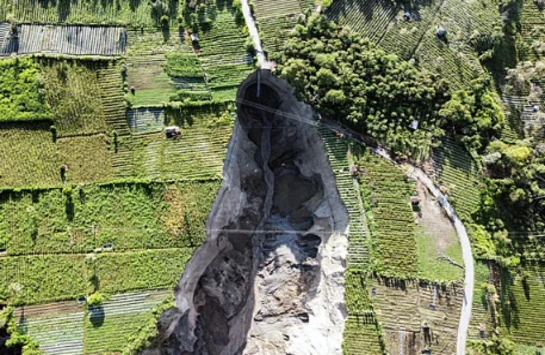
Residents of Pondor Balik village in Central Java, Indonesia, face a growing nightmare as a massive sinkhole continues to expand relentlessly.
This geological phenomenon, which started small in the early 2000s, now spans over 30,000 square meters and plunges deeper than 100 meters. Experts warn that without intervention, it could swallow entire homes and disrupt local life even more.
Geologists first noticed soil instability in the region around 2005, when villagers reported minor cracks appearing in fields and roads. However, the situation escalated dramatically in 2021. Heavy rains and possible underground erosion triggered rapid growth, turning the initial depression into a colossal crater.
Today, the sinkhole has already devoured key infrastructure, including vital roads, fertile coffee and sugarcane plantations, and several outbuildings. Its jagged edges now creep closer to residential areas, forcing families to live in constant fear.
Local authorities act swiftly to mitigate risks. They relocate high-voltage power lines away from the expanding zone to prevent electrical hazards.
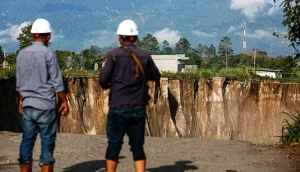
Moreover, emergency teams monitor the site daily with drones and ground sensors. Evacuation plans stand ready for over 500 affected residents, and temporary housing options emerge in nearby safe zones.
Causes Behind the Pondor Balik Sinkhole and Similar Geological Threats in Indonesia
Indonesia’s location on the Ring of Fire makes it prone to such events. The Pondor Balik sinkhole likely results from karst processes—dissolution of soluble rocks like limestone by acidic groundwater.
Human activities, such as excessive groundwater extraction for agriculture and mining, accelerate this. Climate change adds fuel with more intense monsoons that saturate the soil and widen underground voids.
Similar disasters struck elsewhere in Indonesia. For instance, a 2020 sinkhole in East Java engulfed farmland, while Bali’s 2018 event disrupted tourism. Globally, Florida’s “Sinkhole Alley” and China’s massive tiankengs offer parallels, showing how these anomalies reshape landscapes and economies.
- Key impacts on Pondor Balik: Loss of over 50 hectares of arable land;
- Disruption to local economy reliant on coffee exports;
- Potential contamination of groundwater sources;
- Increased landslide risks during rainy seasons.
Scientists from the Indonesian Geological Agency collaborate with international experts to study the site. They use ground-penetrating radar to map underground cavities and predict further expansion. Early data suggests the sinkhole could grow another 10,000 square meters in the next year if unchecked.
Community leaders push for long-term solutions, including reforestation to stabilize soil and sustainable farming practices. Meanwhile, aid organizations provide support, highlighting the human cost of these natural hazards.
Source: EADaily news agency and Indonesian Geological Agency reports.